The shipping industry is undergoing considerable changes as environmental regulations and sustainability goals are redesigning how vessels are powered. Liquefied natural gas (LNG) bunkering, which involves refueling ships with LNG, has quickly emerged as a cleaner, more efficient alternative to traditional marine fuels like heavy fuel oil and marine diesel. With its ability to reduce greenhouse gas emissions and pollutants, LNG has become an important part in lessening the environmental impact of maritime operations.
The United States (U.S.) has welcomed this shift toward cleaner energy solutions, recognizing the increasing demand for sustainable options. LNG infrastructure is steadily growing across American ports, supported by partnerships between port authorities, shipping lines, and energy firms.
LNG Bunkering Market Growth in the U.S.
Major LNG bunkering locations in the U.S. include Jacksonville and Port Canaveral in Florida, Long Beach, California, Galveston, Texas and Port Fourchon, Louisiana. These ports play a crucial role in expanding the use of LNG. According to Market Research Future, the U.S. LNG Bunkering Market is projected to grow from $365.4 million in 2024 to an estimated $7.68 billion by 2035, with a compound annual growth rate (CAGR) of approximately 31.9%.
This growth is tied to several factors:
-
- Reduced Environmental Impact: LNG can lower sulfur oxide (SOx) and nitrogen oxide (NOx) emissions by up to 90%, helping vessels comply with International Maritime Organization (IMO) regulations.
-
- Cost Efficiency: Beyond environmental benefits, after the initial infrastructure and vessel costs, LNG can be a more cost-effective fuel option, helping operators reduce overall expenses in the long-term.
-
- Growing LNG-Powered Fleet: The number of LNG-powered vessels, including tankers, container ships, and cruise ships, continues to expand, increasing the demand for LNG bunkering services.
-
- Supportive Infrastructure: U.S. ports along the East and Gulf coasts are investing in LNG bunkering facilities, further bolstering the country’s ability to meet demand.
The growing use of ship-to-ship transfers, combined with the implementation of green corridors, is also helping to ease the shift toward more ecological practices in shipping. Green corridors prioritize low-emission shipping routes and provide incentives for international and domestic shipping companies to use LNG as their primary fuel source.
NETSCo’s Barge Solution for LNG Bunkering
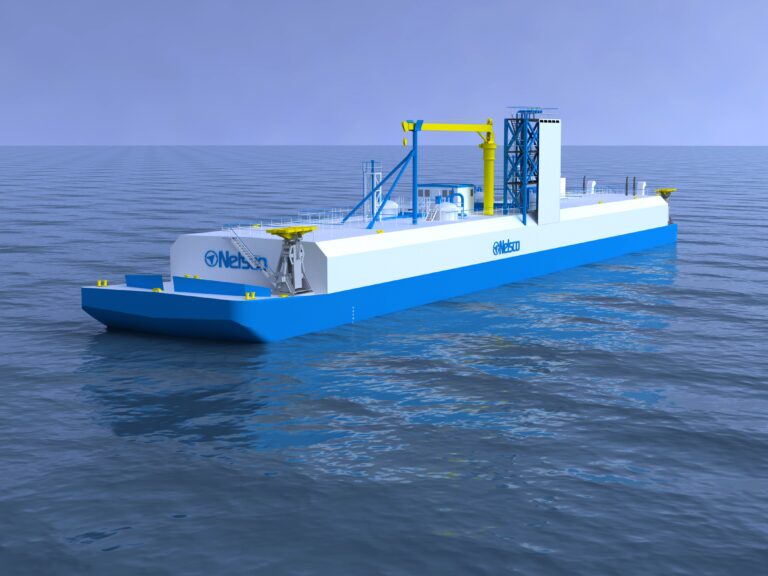
To meet the growing demand for LNG fueling solutions, NETSCo has developed a 5000 M3 LNG bunker barge. This vessel is designed with simple fabrication in mind and is built to be used in a variety of environments, from rivers, lakes, bays, and sounds. Its dimensions, including a length of 376 feet, beam of 54 feet, and draft of 9 feet 6 inches, allows it to operate efficiently while minimizing its environmental footprint. The LNG cargo containment has four tanks that are 1,250 M3, Type C and offloading is performed at 1,000 M3/hr.
The NETSCo LNG bunker barge represents a practical and reliable solution for delivering LNG to vessels. Designed to balance operational efficiency with sustainability, it addresses key environmental and economic needs within the U.S. maritime sector.
The Road Ahead for LNG Bunkering
For shipowners and operators looking to reduce emissions, comply with environmental regulations, and achieve cost savings, LNG provides an alternative to traditional marine fuels. The NETSCo LNG bunker barge offers a highly practical solution to support this transition.
If you’re interested in discussing how LNG bunkering can fit into your operational strategy, reach out to the NETSCo team today at info@netsco.us