A leading cement company was ready to expand its operations but hit a significant logistical roadblock. The company needed to offload large quantities of cement from massive vessels, but the wharf available wasn’t built for such heavy operations. To make matters more complicated, the company didn’t own the dock, which ruled out any major renovations. This is where NETSCo, stepped in to engineer an innovative solution.
The challenge was multifaceted. The cement company had to figure out how to efficiently transfer cement from Handymax-sized bulk carriers to shore-side silos. This required a pipeline system capable of handling a massive unload rate and a method that wouldn’t put excessive strain on the structurally limited wharf. Essentially, they needed a way to move huge volumes of product without the infrastructure to support it.
A Phased Approach to a Complex Problem
NETSCo took on the challenge with a strategic, three-phase plan designed to be efficient, cost-effective, and minimally disruptive to the existing dock.
Phase 1: A Floating Solution for Efficient Offloading
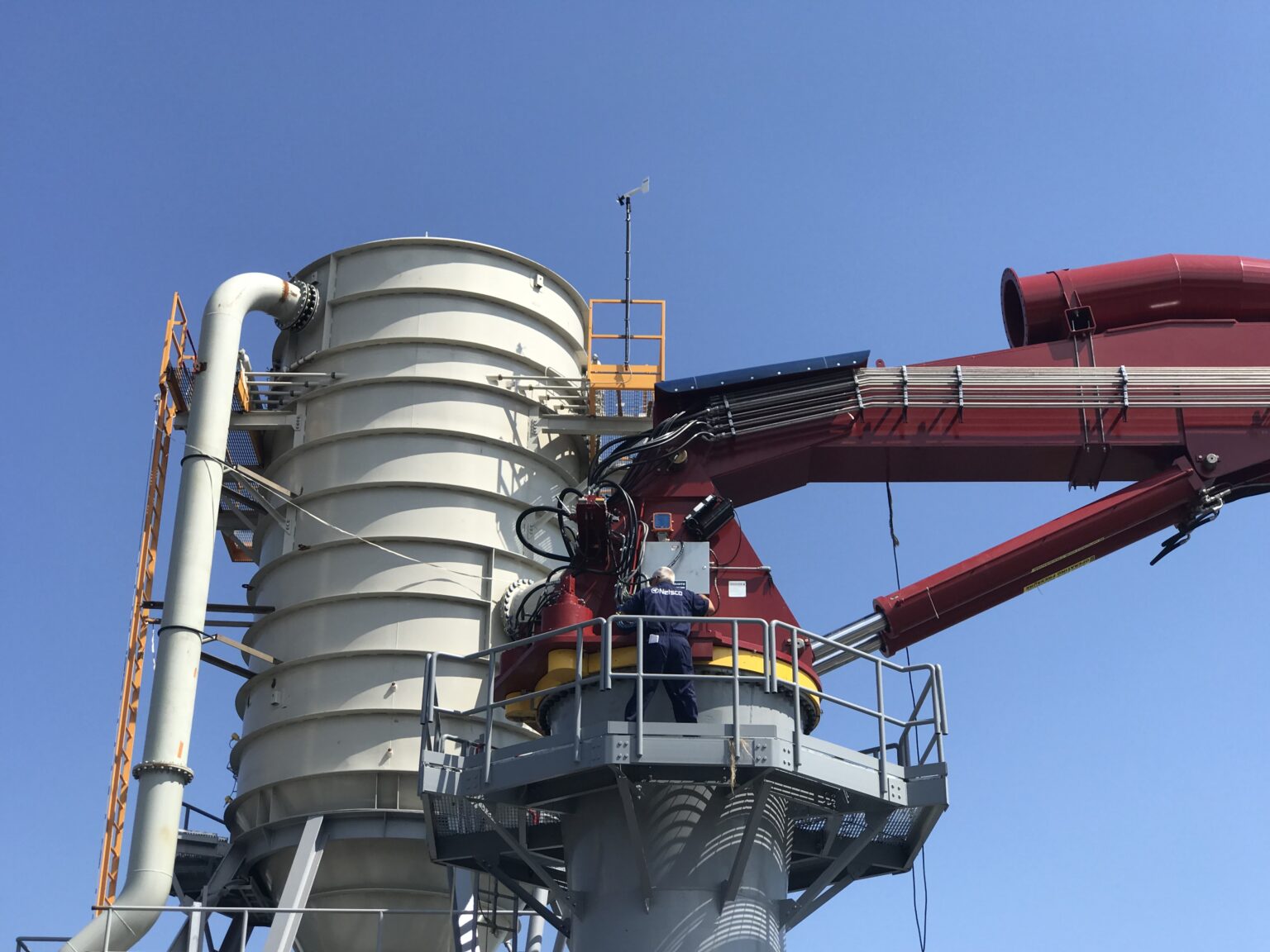
The first step was to bridge the gap between the large bulk carriers and the dock. NETSCo introduced a 4,000 metric ton transport barge equipped with its own ship self-unloader. This barge acted as a powerful intermediary. It could pull alongside the larger vessels, receive the cement, and then transport it to the wharf for offloading.
This approach was brilliant for two key reasons. First, it enabled a fast and efficient transfer of cement. Second, the barge was designed for versatility. When not being used for this specific offloading task, it could be deployed for other transport duties, adding significant operational flexibility and value to the company’s fleet.
Phase 2: Designing the Perfect Pipeline
With the offloading method established, the next hurdle was getting the cement from the barge to the storage silos on shore. NETSCo’s engineers conducted a detailed analysis of the discharge rates to determine the ideal pipeline diameter.
The goal was to create a system that could handle the rapid flow of cement without bottlenecks. The resulting pipeline was designed and installed to ensure a continuous and swift delivery from the ship’s unloader directly to the silos, which was crucial for maintaining the overall speed and efficiency of the entire operation.
Phase 3: Protecting the Wharf
The final and most critical piece of the puzzle was to execute the entire process without damaging the wharf. Since extensive and costly renovations were not an option, NETSCo’s solution was engineered to minimize any impact on the dock’s structure.
The innovative design of the barge and pipeline system meant that the heavy-duty work happened on the water, not on the land. This clever workaround allowed the operation to proceed smoothly without requiring any structural upgrades to the wharf, preserving its integrity and saving the company from astronomical repair costs.
A Landmark Achievement in Maritime Logistics
NETSCo’s creative, multi-phase solution successfully tackled every challenge the cement company faced. The new system achieved remarkable offloading speeds, handling up to 35,000 metric tons of cement per vessel without disrupting dock operations. By utilizing a multi-use barge and an efficient pipeline, the company avoided the high costs associated with additional equipment and complex construction.
This project stands as a powerful example of engineering excellence and creative problem-solving. By partnering with NETSCo, the cement company was able to pursue growth and enhance its logistical capabilities while maintaining a strong commitment to efficiency and cost-effectiveness. It’s a testament to how tailored, innovative thinking can overcome even the most complex maritime challenges.